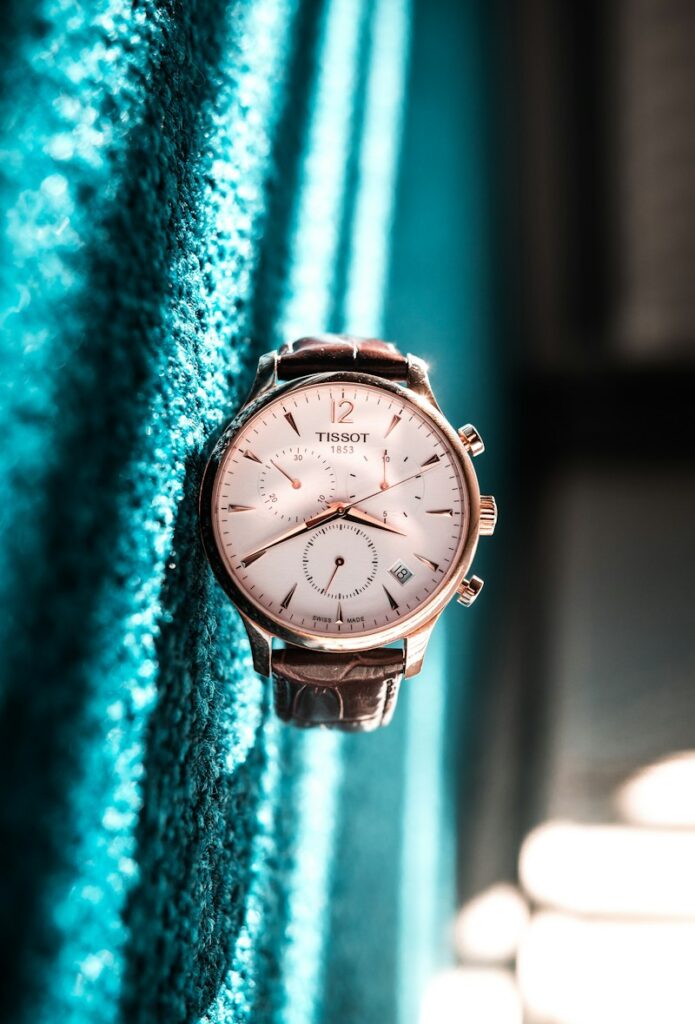
My collection has evolved toward simplicity. Early on, I chased complications — chronographs, perpetual calendars, moon phases. Every function seemed to justify the expense. More features meant more value, or so I reasoned.
Two decades later, the watches I reach for most often display only hours, minutes, and sometimes seconds. No date, no complications, no distractions. Just time, elegantly presented.
Why Simplicity Works
A simple dial focuses attention on finishing. When there are no subdials or apertures to examine, the eye settles on the indices themselves — their shape, their application, how light catches them at different angles. Hands become compositional elements. The dial texture, whether brushed, grained, or lacquered, reveals itself.
Complications often serve as excuses for lesser finishing. Manufacturers add features to justify prices, then economize on hand-polishing or dial refinement. The simplest watches from serious makers show nowhere to hide.
Patek Calatrava 96
The reference 96, produced from 1932 to 1973, exemplifies this philosophy. Thirty-one millimeters in diameter. Hours and minutes only. Yet collectors pay substantial premiums for fine examples because every detail rewards examination.
Modern dress watches often fail this test. They scale up to contemporary sizes but add thickness and visual weight that undermines elegance. A proper dress watch should disappear under a cuff, emerging only when consulted.
I continue buying the old ones.
